Navigating the world of gaming monitors can be tough, especially with so many options. Many busy US gamers, balancing work and family, often ask: are curved screens good for gaming? This comprehensive guide dives into the real-world benefits and drawbacks of curved monitors for players like you. We'll explore how these displays can boost immersion, potentially reduce eye strain, and impact competitive play. Discover if a curved setup truly enhances your experience, whether you're unwinding with a cozy indie, grinding in an MMO, or trying to climb ranks in an FPS. We'll cut through the hype to give you practical insights on performance, value, and compatibility, helping you make an informed decision for your next hardware upgrade without breaking the bank. Understand the latest trends, compare options, and optimize your gaming setup for maximum enjoyment and efficiency. Get ready to level up your display knowledge today!
Q: What makes curved screens good for gaming immersion?
A: Curved screens enhance gaming immersion by subtly wrapping the visual content around your peripheral vision, effectively expanding your perceived field of view. This creates a more encompassing experience, making you feel more 'inside' the game, particularly beneficial for expansive open-world titles, racing simulators, and flight games. The consistent focal distance across the screen also contributes to a more natural and engaging visual experience.
Q: Do curved monitors help reduce eye strain for gamers?
A: Many gamers find that curved monitors can help reduce eye strain, especially during extended play sessions. The curvature of the screen can match the natural curve of the human eye, meaning your eyes don't have to adjust focus as much when scanning from the center to the edges of a large display. This can lead to greater comfort and less fatigue, a significant advantage for adults balancing gaming with busy lives.
Q: Are curved monitors suitable for competitive FPS and esports gaming?
A: While many professional esports players traditionally opt for flat monitors for perceived accuracy, modern curved monitors, especially those with subtle curves, are increasingly viable for competitive FPS. The main concern is often minor distortion at the edges, which has been largely minimized. For most gamers, the enhanced peripheral vision and immersion can even offer an advantage, making them suitable for a wide range of competitive play outside of the absolute professional tier.
Q: What curvature radius is ideal for a gaming monitor?
A: The ideal curvature radius for a gaming monitor depends on personal preference and screen size. Common ratios like 1800R (subtle) and 1500R (moderate) are popular for a balanced experience, offering good immersion without feeling too aggressive. For maximum immersion, especially with larger ultrawide monitors, a tighter 1000R curve can truly envelop your vision, matching the human eye's natural curvature.
Q: Are there any specific game genres that benefit most from curved monitors?
A: Absolutely! Game genres that benefit most from curved monitors include open-world RPGs (like Starfield or Cyberpunk 2077), racing games (Forza, F1), flight simulators (Microsoft Flight Simulator), and grand strategy titles. These games leverage the expanded field of view and heightened immersion that curved displays provide, making the virtual worlds feel even more vast and captivating. Many social games and MMOs also feel more expansive.
Q: Do curved monitors require more powerful graphics cards?
A: Curved monitors themselves don't inherently demand more GPU power than flat ones of the same resolution and refresh rate. However, curved monitors are very frequently ultrawide (e.g., 3440x1440), which means they have significantly more pixels than a standard 1920x1080 or even 2560x1440 display. Driving these extra pixels at high frame rates *does* require a more powerful graphics card, such as an NVIDIA RTX 40-series or AMD Radeon RX 7000-series, to ensure smooth performance.
Q: What are the main drawbacks of choosing a curved gaming monitor?
A: The main drawbacks of curved gaming monitors typically include a higher price point compared to flat equivalents, potential for slight visual distortion for non-gaming tasks requiring perfectly straight lines (like graphic design), and less ideal viewing angles for multiple people. While these are minor for most gamers, they are worth considering, especially if budget or multi-user viewing is a priority for your setup.
Hey fellow gamers! If you're anything like me, you're constantly trying to squeeze in some quality gaming time between work, family, and all of life's other demands. You want your precious moments in virtual worlds to be as immersive and enjoyable as possible, right? And when it comes to upgrading your setup, especially your monitor, it feels like there's a new 'must-have' technology every month. One trend that's been around for a while but still sparks a lot of debate is the curved screen. You've probably seen them at your buddy's house or in a tech review, looking sleek and futuristic. But the burning question remains: are curved screens good for gaming for people like us who value both performance and practicality?
We're talking about gamers who appreciate the relaxation and skill-building that gaming offers, but also need to be smart about their purchases. You want something that works, delivers value, and enhances your play without causing headaches or buyer's remorse. With recent data showing that 87% of US gamers play regularly, often clocking in 10+ hours a week, and with mobile gaming still dominant but PC/console strong, optimizing your main battle station is key. This isn't just about hype; it's about real-world performance and comfort. Let's cut through the noise and figure out if a curved monitor is truly a game-changer for your setup.
This guide is designed to be your go-to resource, breaking down everything you need to know about curved monitors for gaming. We’ll answer the questions real gamers are asking, from immersion to eye strain, competitive play to budget concerns. So, grab your favorite drink, settle in, and let's optimize your display choice!
What are the real benefits of a curved monitor for gaming?
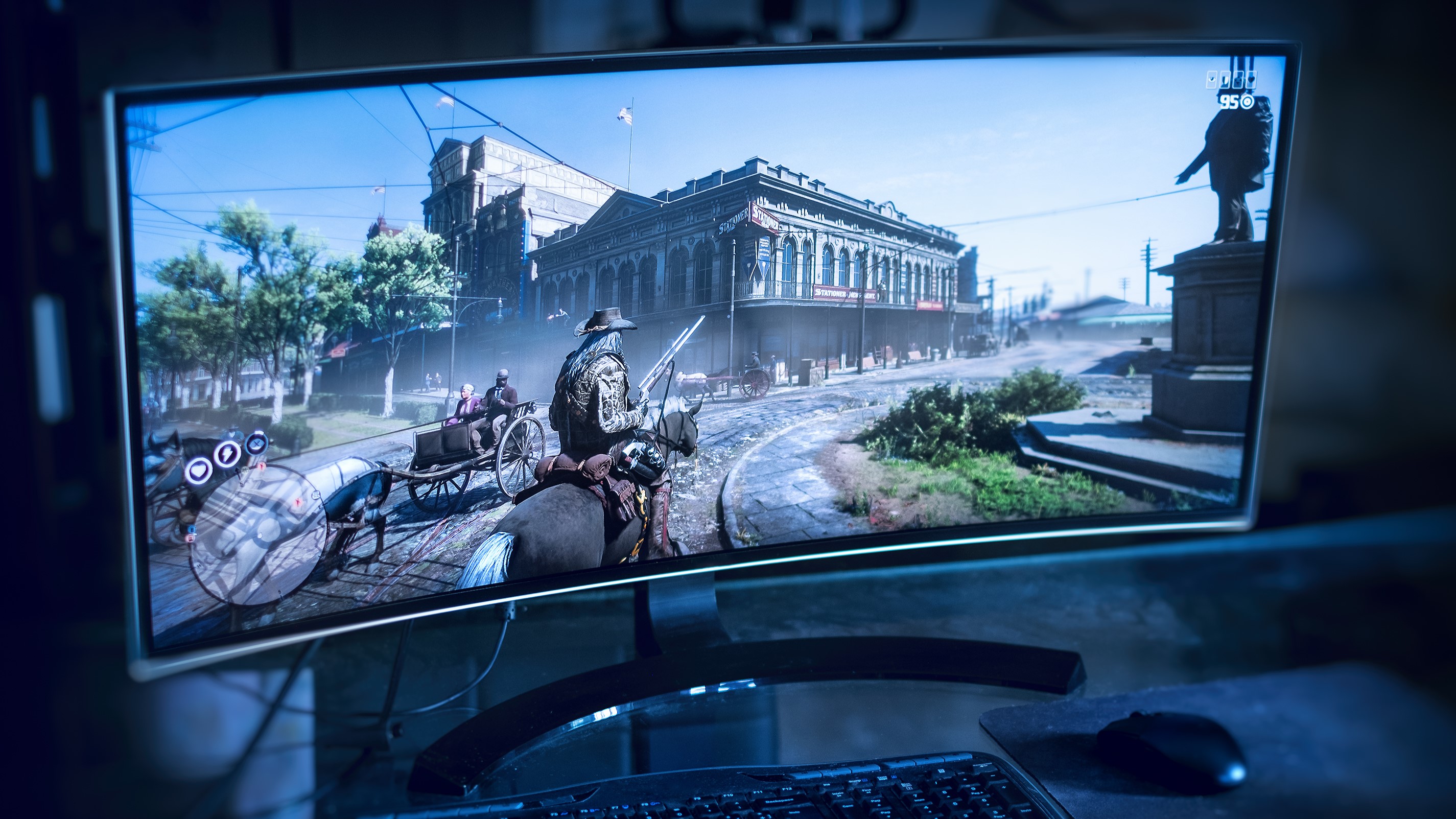
Curved monitors aim to wrap the image around your peripheral vision, creating a more immersive experience. This effect is most noticeable on larger, ultrawide displays where the curvature genuinely fills more of your field of view. For single-player story-driven games, open-world adventures, or flight simulators, the feeling of being 'inside' the game can be significantly enhanced. It feels more natural, almost like a subtle form of VR without the headset. The consistent viewing distance from the center to the edges of the screen can also contribute to this sense of immersion, drawing you deeper into the virtual world.
Another significant benefit often cited is potential eye comfort. On a flat monitor, your eyes might slightly adjust focus as they scan from the center to the edges, especially on very large screens. A curved screen maintains a more uniform focal distance across its surface, which some users find can reduce eye strain over long gaming sessions. This is a big plus for busy adults who might only get a few hours of gaming in at a time, wanting to maximize enjoyment without fatigue. It's about making those precious gaming moments more comfortable and less taxing on your vision.
Do curved screens reduce eye strain during long gaming sessions?
For many gamers, particularly those using larger monitors (27 inches and above) or ultrawides, curved screens can indeed contribute to reduced eye strain. The reason lies in the physics of perception. Your eyes naturally perceive objects in an arc, and a curved screen more closely matches this natural curvature of your vision. This means less eye movement and refocusing when scanning across the screen, as all points on the display are approximately equidistant from your eyes.
Think about it: after a long day at work, the last thing you want is your eyes feeling tired from staring at a screen. A curved monitor can make those evening gaming sessions more comfortable, allowing you to stay focused on the action rather than battling eye fatigue. While individual experiences vary, the ergonomic design of curved displays is certainly a thoughtful consideration for anyone spending significant time in front of a monitor, whether for gaming, work, or casual browsing. This benefit can be particularly appreciated by gamers who balance demanding jobs with their passion for gaming.
Are curved monitors good for competitive FPS games or esports?
This is where the debate gets a bit more nuanced. For fast-paced, competitive FPS (First-Person Shooter) games or esports titles, many professional players traditionally favor flat monitors. The primary reason often cited is the perceived distortion at the edges of a curved screen, which some argue can make it harder to accurately aim or track enemies, especially at the very periphery. Small details or quick movements might feel slightly warped, potentially impacting critical headshots or enemy spotting.
However, modern curved monitors, especially those with subtler curvatures (like 1800R or 1500R), have largely minimized this issue. For a casual or even serious competitive gamer who isn't playing at a pro level, the benefits of increased peripheral vision and immersion can outweigh any minor perceived distortion. The wider field of view offered by ultrawide curved monitors, for instance, can sometimes provide an advantage in seeing more of the battlefield. Ultimately, it often comes down to personal preference and what feels most comfortable and effective for *your* playstyle. Many gamers report no issues and even prefer the wrap-around feel.
What size and curvature is best for gaming?
Choosing the right size and curvature ratio is crucial for maximizing the benefits of a curved monitor. For most gamers, a sweet spot for size is generally 27 to 34 inches. Below 27 inches, the curvature effect is often minimal and might not be worth the extra cost. For a truly immersive experience, especially with ultrawide aspect ratios (21:9 or 32:9), 34 inches and above are fantastic. These larger displays are where the curve truly shines, wrapping the image around your vision effectively.
Curvature ratios are expressed as a number followed by 'R' (e.g., 1800R, 1500R, 1000R). The lower the number, the more aggressive the curve. Here's a quick guide:
- 1800R: A subtle curve, often found on larger displays. Good for general use and gaming, less noticeable distortion.
- 1500R: A moderate curve, very popular for gaming monitors. Offers a good balance of immersion and visual comfort.
- 1000R: A very aggressive curve, designed for maximum immersion. Best suited for single-user setups and highly immersive gaming, as it's designed to match the curvature of the human eye. Can feel too extreme for some or for multi-person viewing.
For gamers balancing work and play, a 34-inch ultrawide with a 1500R or 1800R curve often provides the best of both worlds: great immersion for games and ample screen real estate for productivity tasks, without feeling overwhelming.
Are there any downsides to curved monitors that gamers should know?
While curved monitors offer many advantages, they aren't without potential drawbacks. One common concern is the cost. Curved monitors, especially ultrawide and high-refresh-rate models, tend to be more expensive than their flat counterparts. For gamers on a budget or those looking for value, this can be a significant factor. It's important to weigh the immersive benefits against your financial limits.
Another point is viewing angles. While ideal for a single user sitting directly in front, the curved nature can sometimes make images appear distorted or less clear from extreme side angles. This might not be an issue if you're the only one gaming, but if you frequently have friends watching over your shoulder, or if you're using it for collaborative work, it's something to consider. Lastly, for graphic designers or photographers who require absolute straight lines and perfect geometry, the slight distortion from the curve can be problematic, though this is less of a concern for pure gaming.
How do curved monitors compare to flat screens for general gaming?
When comparing curved versus flat screens for general gaming, it really boils down to priorities. Flat screens are typically more affordable, offer consistent viewing angles for multiple people, and are often preferred for highly competitive esports due to the lack of any perceived edge distortion. They are reliable, ubiquitous, and excel in situations where precise, undistorted lines are critical.
Curved monitors, on the other hand, offer a unique immersion that flat screens simply cannot replicate. The wrap-around effect pulls you deeper into the game, especially noticeable in open-world titles, racing simulations, or any game where peripheral vision adds to the experience. They also have the potential for reduced eye strain, which is a huge benefit for long gaming sessions after a stressful day. For many modern gamers, particularly those enjoying a mix of genres and seeking a more cinematic feel, the curved display offers a more engaging and comfortable experience. It's less about one being objectively 'better' and more about what enhances *your* specific gaming habits and preferences.
What about productivity or non-gaming use on a curved monitor?
This is a common question for gamers who also use their setup for work, studying, or general browsing – which is a lot of us! The good news is that curved monitors, especially ultrawide models, can be fantastic for productivity. The expanded horizontal screen real estate means you can comfortably have multiple windows open side-by-side, mimicking a dual-monitor setup but without the bezel in the middle. Imagine having your game guide, Discord, and a spreadsheet all visible at once. This multi-tasking capability is a huge win for balancing life and play.
While some graphic design professionals might shy away due to potential distortion of straight lines, for most office tasks, coding, browsing, or media consumption, a curved ultrawide can significantly boost efficiency and comfort. The reduced eye strain discussed earlier applies equally to long work sessions. So, if you're weighing the pros and cons, consider that a good curved gaming monitor can pull double duty, enhancing both your escapism and your daily grind.
Should I upgrade to a curved monitor now or wait?
The market for curved monitors is mature, competitive, and offering excellent value, making now a very good time to consider an upgrade. Manufacturers like Samsung, LG, Dell, and Acer have refined their curved display technologies, offering a wide range of options across various price points. You can find high-refresh-rate, low-response-time curved monitors that are perfect for gaming without needing to spend an exorbitant amount. Current trends show strong adoption of ultrawide curved screens for productivity and immersive entertainment.
If you're currently using an older, smaller flat monitor and craving a more immersive experience, or if you're experiencing eye strain during long sessions, upgrading to a curved monitor could significantly enhance your setup. The advancements in panel technology, particularly in VA and OLED curved displays, provide stunning visuals. As always, consider your budget and current PC hardware to ensure your graphics card can drive a higher resolution or refresh rate effectively. But if you've been on the fence, the current generation of curved monitors offers a compelling blend of performance, immersion, and value.
So, are curved screens good for gaming? For the average US gamer balancing life with their passion, valuing immersion, eye comfort, and smart spending, the answer is a resounding 'yes' for most use cases. They offer a unique, wrap-around experience that can genuinely pull you deeper into your favorite virtual worlds, making those limited gaming hours even more enjoyable and less fatiguing. While competitive pros might debate the minutiae, for the vast majority of us, a well-chosen curved monitor is a fantastic upgrade.
Don't just take my word for it; check out some of the excellent options available this month. Look for models with a 144Hz+ refresh rate, low response time (1ms MPRT or GtG), and a curvature around 1500R for a great balance. Consider brands known for quality panels and good customer support. Happy gaming!
What's your biggest gaming challenge when it comes to hardware upgrades or balancing gaming with life? Comment below and let's help each other out!
FAQ Section
Q: Do curved monitors cause motion sickness?
A: For most users, no. Curved monitors are designed to enhance natural vision. However, like any new display technology, a small percentage of people might experience an adjustment period. If you're sensitive, start with a subtle curve (like 1800R).
Q: Can you mount a curved monitor on a wall?
A: Yes, most curved monitors are VESA mount compatible, allowing you to use standard monitor arms or wall mounts. Always check the specific VESA pattern and weight capacity for your monitor and mount.
Q: Are curved monitors better for movies and streaming?
A: Absolutely! The immersive quality that benefits gaming also translates wonderfully to movies and streaming, especially ultrawide content that fills the screen. It can create a more cinematic viewing experience, pulling you into the content.
Q: What graphics card do I need for a curved ultrawide gaming monitor?
A: An ultrawide (21:9) monitor, especially at higher resolutions like 3440x1440, requires a more powerful graphics card than a standard 16:9 monitor. For smooth high-refresh-rate gaming, an NVIDIA RTX 40-series (e.g., 4070 or higher) or AMD Radeon RX 7000-series (e.g., 7800 XT or higher) is generally recommended to drive those extra pixels and maintain high frame rates.
Enhanced immersion for single-player games, improved field of view, reduced eye strain potential, ideal for ultrawide setups, competitive gaming pros and cons, optimal curvature and size selection, budget-friendly upgrade tips, multi-tasking and productivity considerations on curved monitors.
35


Best Curved Monitors For Gaming In 2026 These Are The Bendy Displays I 1920 80 . Best Curved Monitors Of 2025 Tested And Rated Tom S Guide 1200 80 . Best Curved Gaming Monitor 2026 Displays I D Grab For Immersive PC 1920 80 . 12 Best Curved Gaming Monitors With High Refresh Rates May 2026 Best Curved Gaming Monitors With High Refresh Rates . Premium Photo Curved Gaming Monitor Showcase Immersive Experience Curved Gaming Monitor Showcase Immersive Experience 1029476 206148



7 Best Curved Gaming Monitors Of 2026 Top 7 Curved Gaming Monitors . Best Curved Gaming Monitors In 2026 Reviews Buying Advice Best Curved Gaming Monitor 1024x574 . The Best Curved Monitors For 2026 The Best Monitors For 2025 E4cr.640 . Best Curved Ultrawide Gaming Monitor AC . Top Curved Monitors For Gaming


15 Best Curved Monitors For Gaming In 2025 Elevate Your Play With Top Gaming Curved Monitors A3hun . Best Curved Gaming Monitors 2024 Dual UHD Gaming Monitor Dl9 . The Best Gaming Monitors For 2026 The Best Curved Monitors For 2026 43th.640 . Flat Vs Curved Monitors And Displays Which Is Best Stuff Odyssey Ark PR Dl6 . Best Curved Monitors For Gaming In 2024 PC Gamer
Best Curved Monitors For Gaming In 2025 These Are The Bendy Displays I . 13 Best Curved Gaming Monitors March 2026 Complete Guide B0DHJBWY52 Customer 1 1536x864 . Best Curved Gaming Monitor 2026 Displays I D Grab For Immersive PC . 10 Best Curved Gaming Monitors March 2026 Expert Roundup Best Curved Gaming Monitors 1024x559 . 13 Best Curved Gaming Monitors March 2026 Complete Guide Best Curved Gaming Monitors 300x164

13 Best Curved Gaming Monitors March 2026 Complete Guide B0DHJBWY52 Customer 2 1024x768 . 13 Best Curved Gaming Monitors March 2026 Complete Guide B0F6724X5N Customer 1 1024x576 . 13 Best Curved Gaming Monitors March 2026 Complete Guide B0DZL719V1 Customer 1 300x265 . 12 Best Curved Gaming Monitors February 2026 Complete Guide B0BTKJFRDV Customer 1 . 13 Best Curved Gaming Monitors March 2026 Complete Guide B0D2FSYS5J Customer 1 225x300

13 Best Curved Gaming Monitors March 2026 Complete Guide B0D685SYKN Customer 1 1536x864 . Are Curved Monitors Good For FPS Games Explained Tech Plural Curved Monitors 52 150x113 . 13 Best Curved Gaming Monitors March 2026 Complete Guide B0F6724X5N Customer 2 1536x1152 . 13 Best Curved Gaming Monitors March 2026 Complete Guide B0D2FZS3JM Customer 2 225x300 . 13 Best Curved Gaming Monitors March 2026 Complete Guide B0D2FSYS5J Customer 2 576x1024


The Best SSD For The Steam Deck Xbox ROG Ally And Ally X In 2026 . Top Rated Curved Gaming Monitors . Samsung Globally Launches World S Highest Performance Curved Gaming Odyssey G9 4 . Best Curved Ultrawide Gaming Monitor Viotek 49inch Monitor 010 . Asus New 5K Gaming Monitor Is So High End It Doesn T Even Officially